
In this rapidly advancing digital era, have you ever wondered how data can help improve employee performance? What if strategic decisions in human resource management (HR) were no longer based on intuition but on accurate data? It’s time for your company to embrace People Analytics, a data-driven approach that helps organizations achieve business goals more effectively.

What is People Analytics?
People Analytics, also known as HR Analytics or Talent Analytics, is a data-driven approach used to manage, understand, and improve employee performance within an organization. This process involves collecting, analyzing, and interpreting employee data to support strategic decision-making. The primary goal of People Analytics is to optimize HR management by using data-based insights.
Benefits of People Analytics
- Better Decision Making: Helps managers and organizational leaders make data-driven decisions related to recruitment, promotions, and employee development.
- Increased Productivity: Identifies factors influencing team and individual performance to boost productivity.
- Turnover Management: Detects employee turnover patterns and designs effective retention strategies.
- Better Employee Experience: Understands employee needs and perceptions to create a supportive work environment.
- Cost Efficiency: Reduces costs related to recruitment, training, and employee management with a more targeted approach.
Types of People Analytics
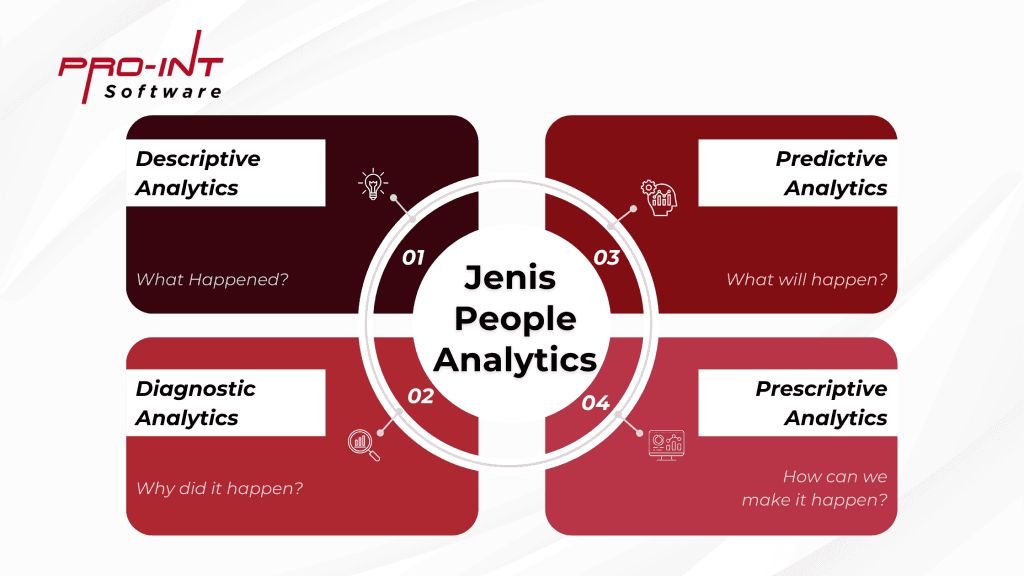
- Descriptive Analytics: Provides an overview of past data, such as absenteeism rates, turnover, or employee survey results.
- Diagnostic Analytics: Analyzes data to uncover the causes behind HR issues, such as why turnover rates are rising.
- Predictive Analytics: Uses historical data to predict future trends, such as the likelihood of employees leaving the company.
- Prescriptive Analytics: Offers action recommendations based on the analyzed data to achieve desired outcomes.
People Analytics Process
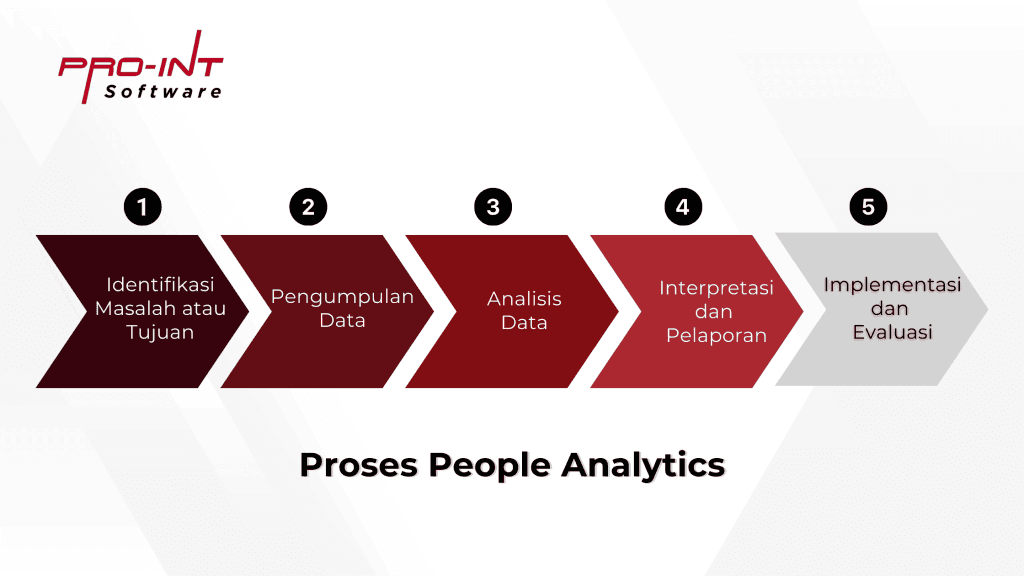
- Identify Problems or Goals: Determine the questions or issues to address, such as reducing turnover or increasing employee engagement.
- Data Collection: Collect data from various sources, including HRIS systems like Pro-Int, employee surveys, and performance records.
- Data Analysis: Use statistical methods or algorithms to find patterns and insights from the collected data.
- Interpretation and Reporting: Communicate the analysis results through reports or data visualizations that are easily understood by stakeholders.
- Implementation and Evaluation: Take action based on the insights gained and assess the impact on the organization.
People Analytics Cycle
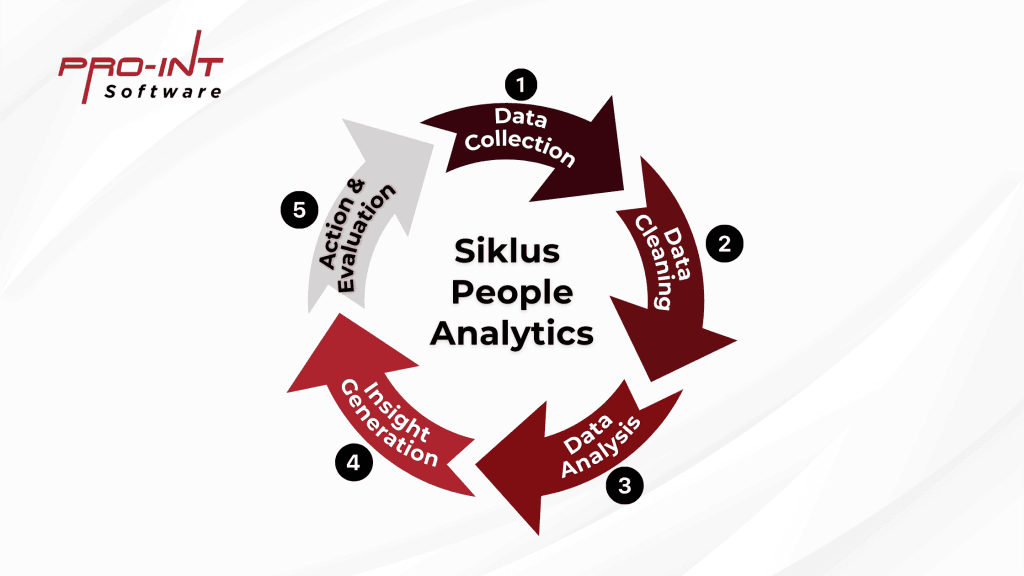
- Data Collection: Gathering employee data from various sources.
- Data Cleaning: Ensuring that the data used is clean, accurate, and relevant.
- Analysis: Using analytical tools to process data and discover patterns.
- Insights Generation: Identifying insights that can be used for decision-making.
- Action & Evaluation: Implementing data-driven actions and measuring their effectiveness.
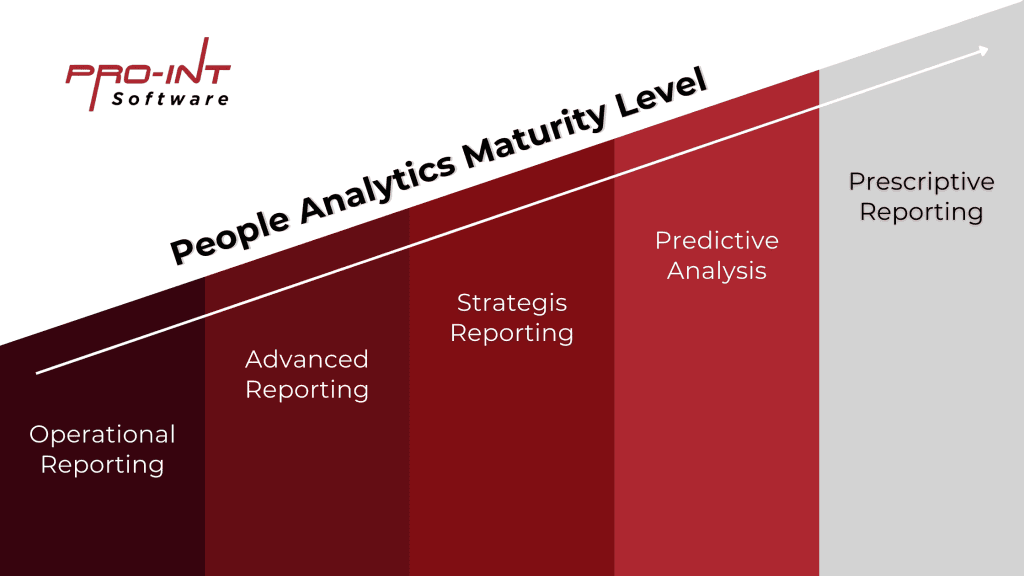
People Analytics Maturity Level
- Operational Reporting: Organizations use data for basic reporting.
- Advanced Reporting: Data is used for deeper analysis, including historical trends.
- Strategic Analytics: Organizations begin to leverage data to support strategic decisions.
- Predictive Analytics: Organizations use predictive models to forecast future trends.
- Prescriptive Analytics: Organizations adopt data-driven insights to provide optimal action recommendations.
Analytical Tools in People Analytics
Pro-Int HRIS systems are the primary solution for managing employee data. With Pro-Int, you can integrate HR data, streamline analysis processes, and support strategic decision-making.
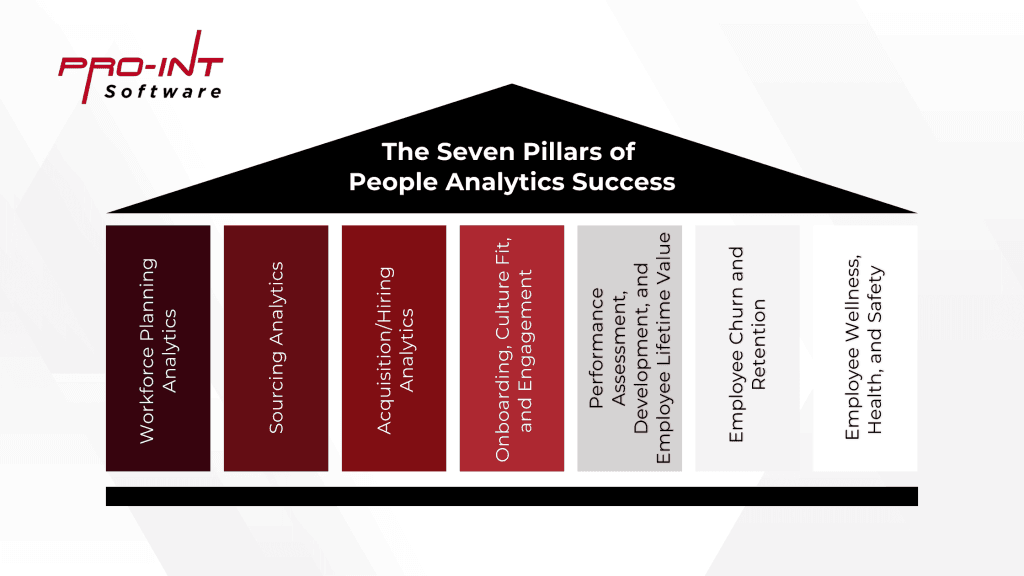
The Seven Pillars of People Analytics Success
- Workforce Planning Analytics: Involves analyzing current workforce data to forecast future talent needs, ensuring the organization has the right people with the right skills at the right time.
- Sourcing Analytics: Data-driven insights are used to optimize talent sourcing, identifying the most effective channels and methods for attracting top talent.
- Acquisition/Hiring Analytics: Focuses on using data to streamline the recruitment process, from candidate screening to improving hiring decisions and reducing bias.
- Onboarding, Culture Fit, and Engagement: Analytics are applied to enhance onboarding processes, ensure new employees fit the company culture, and foster high engagement levels from the start.
- Performance Assessment, Development, and Employee Lifetime Value: People analytics helps assess employee performance, identify development opportunities, and measure the long-term value of employees to the organization.
- Employee Churn and Retention: By analyzing factors that cause churn, organizations can develop strategies to improve retention and reduce turnover, ultimately saving costs and retaining talent.
- Employee Wellness, Health, and Safety: This pillar focuses on using analytics to monitor and improve employee health, well-being, and safety, ensuring a healthier and more productive workforce.
Conclusion
People Analytics is a strategic key to effective and efficient HR management. By optimizing the use of data, companies can enhance productivity, improve employee experiences, and make smarter decisions.
It’s time for your organization to switch to a data-driven system. With Pro-Int HRIS, you can streamline your People Analytics processes and take strategic steps in managing human resources.
Want to learn more? Consult with our Professional Team to see how Pro-Int can help transform your HR operations, or explore other articles on our website for more information on the HR world.